
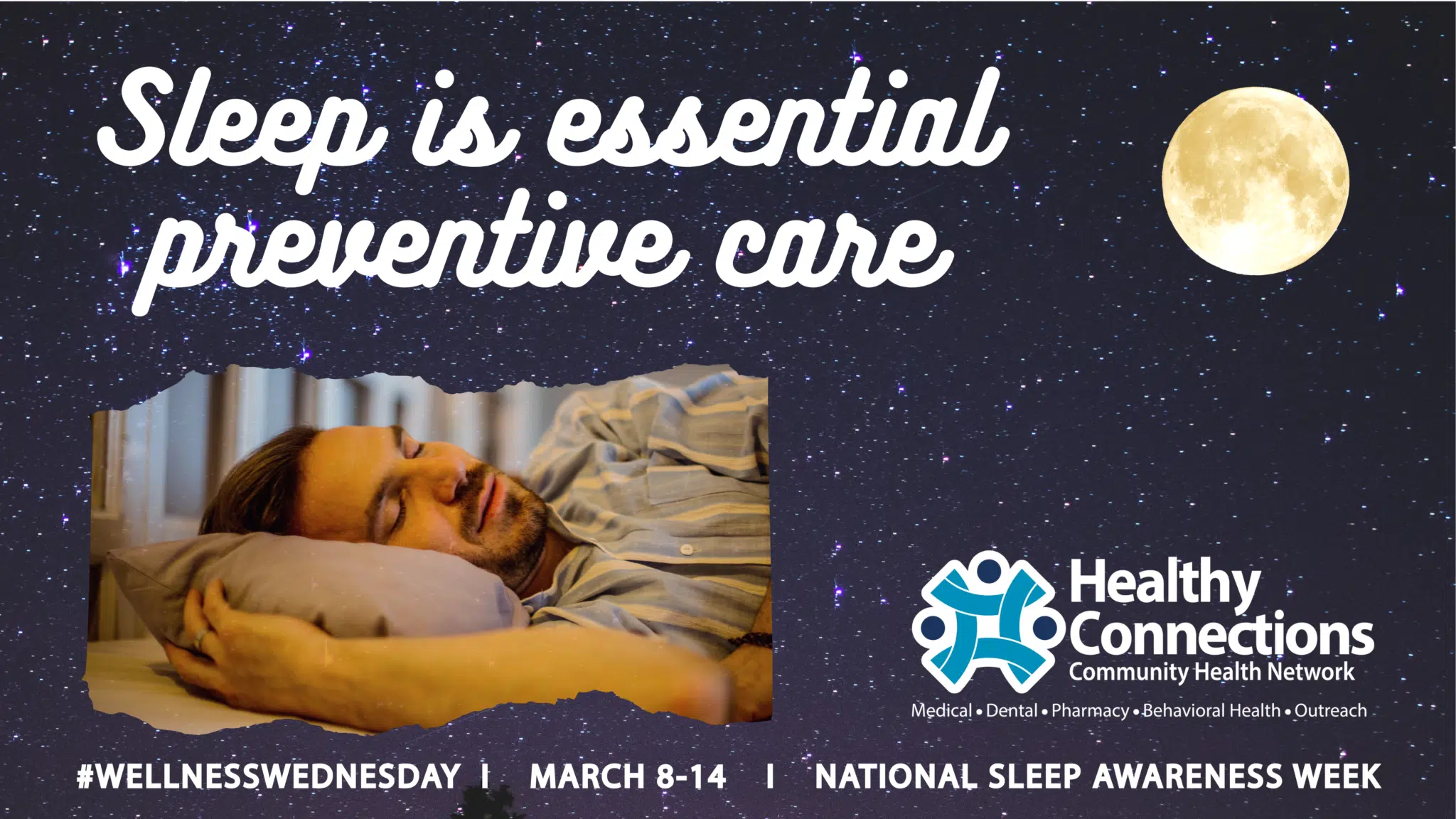
During National Sleep Awareness Week, organized by the National Sleep Foundation, healthcare providers across the country emphasize a simple truth: sleep is not optional. It is essential preventive care.
At Healthy Connections, our providers regularly see patients in Mena, Hot Springs, and surrounding communities who believe chronic fatigue is simply part of life. Parents blame busy schedules. Shift workers assume exhaustion comes with the job. Older adults often think poor sleep is just part of getting older.
It isn’t.
Healthy sleep is one of the most powerful — and often overlooked — pillars of whole-person healthcare. Yet millions of Americans struggle with sleep problems that quietly affect their heart health, mental clarity, and daily energy.
According to the Centers for Disease Control and Prevention (CDC), about one in three adults in the United States does not get enough sleep on a regular basis. Over time, chronic sleep deprivation can significantly increase the risk of serious medical conditions.
Healthy sleep plays a critical role in preventing conditions such as sleep apnea, insomnia, cardiovascular disease, and metabolic disorders, making sleep health an important part of comprehensive primary care.
Why Sleep Health Matters More Than You Think
Adults need 7–9 hours of quality sleep per night for optimal health. When sleep becomes disrupted, the consequences extend far beyond feeling tired.
Chronic sleep deprivation has been linked to:
- High blood pressure
- Heart disease
- Type 2 diabetes
- Weakened immune function
- Anxiety and depression
- Difficulty concentrating and memory problems
Sleep disorders such as obstructive sleep apnea can further increase cardiovascular risk. In fact, untreated sleep apnea has been associated with a higher risk of hypertension, heart attack, and stroke.
Many patients first discover a sleep disorder during a routine primary care visit when discussing symptoms like fatigue, headaches, or poor concentration.
This is why sleep health is considered an important part of comprehensive care at Healthy Connections.
What Our Providers Look For
Our board-certified Providers evaluate sleep as part of preventive care and chronic disease management.
During a visit, providers may:
- Review sleep patterns and daytime energy levels
- Screen for insomnia and obstructive sleep apnea
- Evaluate medications that may interfere with sleep
- Assess related conditions such as obesity, hypertension, or anxiety
- Use validated sleep screening tools when appropriate
In our clinics, we often meet patients who report snoring, morning headaches, persistent fatigue, or daytime brain fog. These symptoms are not “normal.” They can be early warning signs of sleep apnea or other treatable sleep disorders.
When needed, we coordinate sleep studies and specialty referrals while continuing to manage your overall health locally. That continuity of care helps ensure patients receive coordinated treatment rather than fragmented care.
Common Sleep Concerns We Treat
Healthy Connections provides evaluation and treatment for a range of sleep-related concerns, including:
- Insomnia (difficulty falling or staying asleep)
- Obstructive sleep apnea
- Shift work sleep disruption
- Sleep problems related to anxiety or depression
Because we offer integrated primary care and behavioral health services, patients receive coordinated care that addresses both the physical and emotional factors that can interfere with healthy sleep.
When Fatigue and Poor Sleep Signal an Underlying Sleep Disorder
A patient may visit their provider because of constant fatigue, headaches, or difficulty concentrating. Many assume the problem is simply stress or a busy schedule.
However, after discussing symptoms and completing a sleep evaluation, the underlying cause may turn out to be obstructive sleep apnea or chronic insomnia.
Once the sleep disorder is identified and treated, patients often report significant improvements in energy, mood, blood pressure, and overall quality of life. In many cases, addressing sleep becomes the turning point for improving multiple aspects of health.
Sleep problems are rarely isolated issues. They often interact with conditions such as heart disease, diabetes, mental health concerns, and weight management, which is why evaluating sleep is an important part of whole-person healthcare.
Practical Sleep Hygiene Tips That Work
While some sleep problems require medical evaluation, many patients benefit from improving their sleep hygiene habits.
Consider these practical strategies:
Keep a consistent schedule.
Go to bed and wake up at the same time every day, including weekends.
Create a sleep-conducive environment.
A cool, dark, and quiet bedroom supports deeper, more restorative sleep.
Limit stimulants.
Avoid caffeine late in the afternoon and evening.
Reduce screen exposure.
Blue light from phones, tablets, and televisions before bedtime can suppress melatonin and delay sleep.
Address stress proactively.
If racing thoughts keep you awake, behavioral health counseling can help develop strategies that calm the mind and improve sleep quality.
If you are tired of feeling tired, it may be time for a medical evaluation rather than another temporary fix.
When to Schedule a Sleep Evaluation
You should speak with a healthcare provider if you experience:
- Loud snoring or breathing pauses during sleep
- Persistent daytime fatigue
- Difficulty staying asleep for weeks at a time
- Morning headaches
- Mood changes linked to poor rest
Sleep is not a luxury — it is a clinical priority.
Take the First Step Toward Better Sleep
If you experience symptoms such as persistent fatigue, loud snoring, morning headaches, difficulty staying asleep, or daytime brain fog, it may be time to speak with a healthcare provider. Sleep problems are often linked to underlying health conditions that can be identified and treated.
Healthy Connections providers evaluate sleep concerns as part of comprehensive primary care. By addressing sleep health, many patients experience improvements in energy, mental clarity, cardiovascular health, and overall quality of life.
Call 888-710-8220 today to schedule an appointment with Healthy Connections and take the first step toward better sleep and better health.
Better sleep starts with a conversation — and we are here to help.