
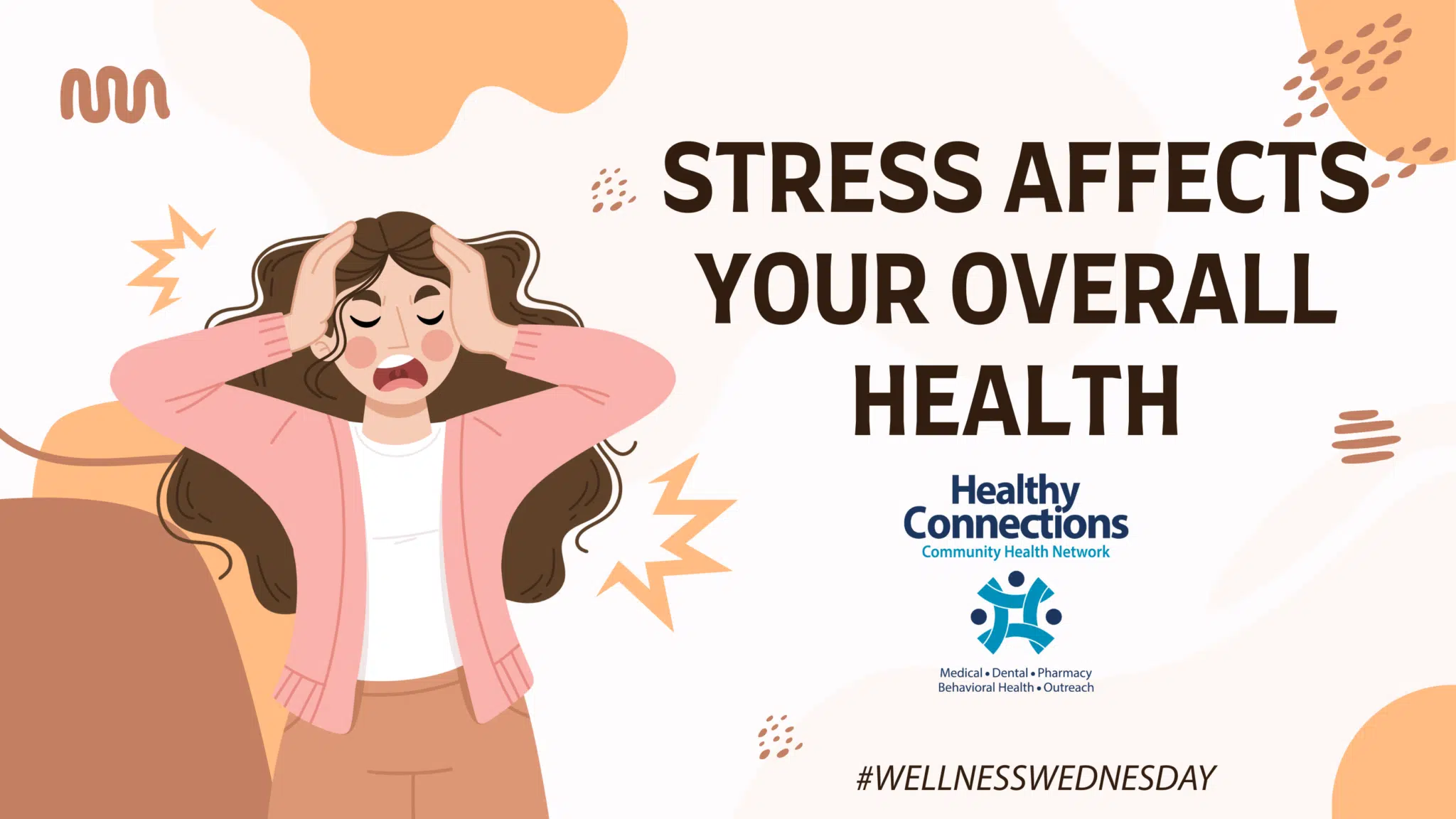
#WellnessWednesday: Don’t Ignore the Impact of Stress
Stress is something most people deal with every day. Work, family responsibilities, finances, and health concerns can all add up quickly. While occasional stress is normal, ongoing stress is not something your body is designed to handle long-term.
This #WellnessWednesday, it is important to take a closer look at how stress affects your health—and why managing it is not optional if you want to feel and function at your best.
At Healthy Connections, our teams see the effects of chronic stress every day. Patients often come in for physical symptoms without realizing stress may be a contributing factor.
How Stress Affects Your Body and Mind
When you experience stress, your body activates a “fight or flight” response. This is helpful in short bursts, but when stress becomes chronic, it can lead to long-term health issues.
According to the CDC, chronic stress can contribute to serious health concerns and affect both physical and mental well-being.
Common effects of prolonged stress include:
- Increased blood pressure and higher risk of heart disease
- Digestive problems such as acid reflux or IBS
- Weakened immune system
- Sleep disturbances and fatigue
- Anxiety, irritability, and mood changes
These symptoms are often interconnected, meaning stress in one area of your life can begin to affect multiple systems in your body.
Why Stress Often Goes Unrecognized
One of the biggest challenges with stress is that it does not always show up the way people expect.
Instead of feeling “stressed,” you may notice:
- Ongoing fatigue
- Trouble sleeping
- Headaches or muscle tension
- Difficulty concentrating
- Changes in appetite
Many patients try to push through these symptoms, assuming they will improve on their own. In reality, untreated stress often worsens over time.
Practical Ways to Manage Stress
Managing stress does not require a complete lifestyle overhaul. Small, consistent changes can make a meaningful difference.
Here are strategies our providers commonly recommend:
- Stay active: Regular movement helps reduce tension and improve mood
- Prioritize sleep: Aim for 7–9 hours and maintain a consistent routine
- Practice mindfulness: Deep breathing, meditation, or quiet time can help reset your mind
- Stay connected: Talking with someone you trust can reduce emotional burden
- Set boundaries: Avoid overcommitting and learn to protect your time
These habits are simple, but when practiced consistently, they can significantly improve how your body responds to stress.
How Healthy Connections Can Help
Stress does not have to be something you manage alone.
At Healthy Connections, we take an integrated approach to care, addressing both the physical and emotional effects of stress.
- Behavioral Health Support: Through Evolve Behavioral Health, patients have access to counseling and practical coping strategies
- Primary Care Monitoring: Our providers help identify stress-related symptoms and manage underlying conditions
- Whole-Person Care: By combining physical and mental health services, we help patients build long-term resilience
With locations in Mena, Hot Springs, and surrounding communities, patients can access care close to home.
Take the First Step Toward Better Stress Management
If you are feeling overwhelmed, fatigued, or not quite yourself, it may be time to take a closer look at how stress is affecting your health.
Chronic stress does not improve on its own. Addressing it early can prevent more serious health concerns and improve your overall quality of life. Understanding how stress affects your health is the first step toward making meaningful changes that improve both your physical and mental well-being.
Call 888-710-8220 today to schedule an appointment with a Healthy Connections provider or visit healthy-connections.org to learn more about our primary care and behavioral health services.
Taking control of your stress is one of the most important steps you can take toward better health.