
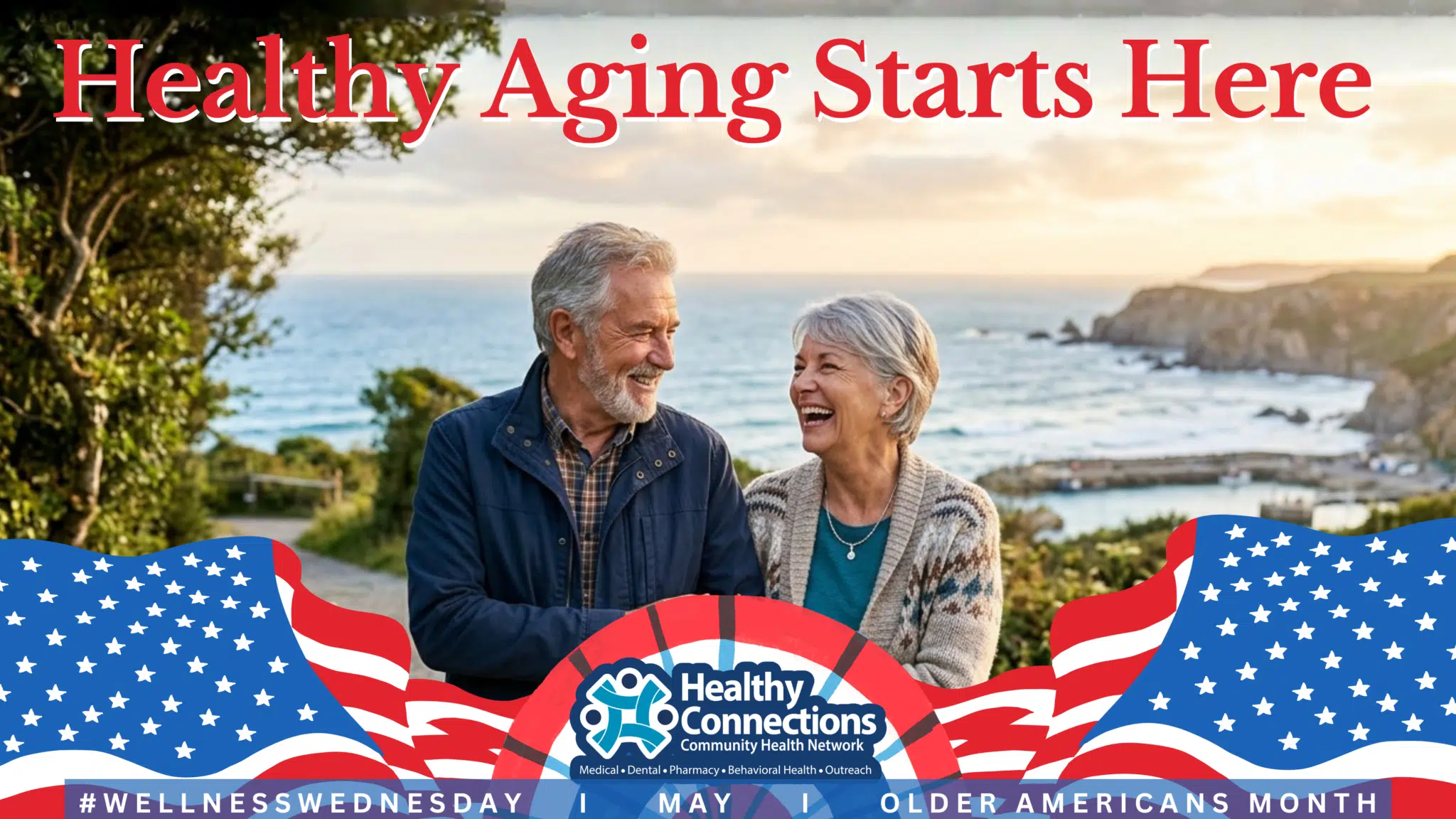
Every May, Older Americans Month highlights the value of helping older adults stay healthy, active, independent, and connected. In 2026, the national theme is “Champion Your Health,” with a focus on prevention, wellness, personal responsibility, informed decision-making, and community support.
That message fits directly with what many adults want as they age: to stay in their homes, keep moving, manage health concerns before they become serious, and continue doing the things that give life meaning.
For this Wellness Wednesday, Healthy Connections is focusing on preventive care for older adults, including an important message for Medicare patients: your coverage may include preventive services designed to help you stay ahead of health concerns.
Medicare preventive services may include exams, screenings, shots, lab tests, health monitoring, counseling, and education to help patients protect their health and detect problems early. Healthy Connections is here to help Medicare patients use preventive care as part of a larger plan for healthy aging, mobility, independence, and whole-person wellness.
Across communities, including Mena, Hot Springs, and surrounding Arkansas areas, Healthy Connections provides primary care, behavioral health, dental care, and support services designed to help patients stay connected to care at every stage of life.
Why Preventive Care for Older Adults Matters
Preventive care is one of the most important parts of healthy aging. Routine visits give patients and providers a chance to identify concerns early, adjust care plans, review medications, and discuss changes that may affect daily life.
For older adults and Medicare patients, preventive care may include:
- Annual wellness visits and routine check-ins
- Blood pressure, cholesterol, and diabetes screenings
- Medication reviews to reduce the risk of interactions or side effects
- Age-appropriate cancer screenings and risk assessments
- Immunizations based on age, health history, and provider recommendations
- Conversations about sleep, nutrition, mood, memory, mobility, and fall risk
These visits matter because many long-term health issues do not start as emergencies. They often begin with small changes: higher blood pressure, increased fatigue, balance concerns, rising blood sugar, medication side effects, or pain that slowly limits activity.
The earlier those changes are addressed, the better chance patients have to stay active, independent, and in control of their health.
Medicare Wellness Visits Can Help Patients Stay Ahead
For many Medicare patients, one of the most valuable preventive care tools is the yearly Medicare Wellness Visit. Medicare explains that this visit is used to develop or update a personalized prevention plan based on the patient’s current health and risk factors. It is important to note that the yearly Wellness Visit is not the same as a full physical exam.
That distinction matters. A Medicare Wellness Visit is focused on prevention, planning, risk assessment, and helping patients understand what screenings or services may be appropriate for them.
During a wellness-focused visit, patients may talk with their provider about:
- Health history and family history
- Current medications and supplements
- Risk factors for chronic disease
- Mobility, balance, and fall prevention
- Memory or cognitive concerns
- Mental and emotional health
- Recommended screenings or vaccines
- A personalized prevention plan
For patients who are new to Medicare, Medicare Part B also covers a one-time “Welcome to Medicare” preventive visit within the first 12 months of having Part B. That visit can help patients get up to date on important screenings and vaccines and talk with a provider about family history and steps to stay healthy.
Healthy Connections can help Medicare patients better understand how preventive visits fit into their care plan and what questions to ask during an appointment.
Mobility and Independence Go Hand in Hand
Mobility is directly tied to independence. When walking, balance, strength, or flexibility becomes more difficult, everyday activities can become harder. Getting to appointments, shopping for groceries, attending church, visiting family, or simply moving safely around the house may become more challenging.
That is why movement should be part of the conversation during preventive care visits.
The National Institute on Aging notes that physical activity is an important part of healthy aging and can help older adults stay healthier as they age. The CDC also emphasizes that adults 65 and older benefit from aerobic, muscle-strengthening, and balance activities each week.
That does not mean every person needs an intense exercise plan. For many older adults, the best starting point is simple and realistic:
- Walking at a comfortable pace
- Stretching gently
- Practicing balance with support nearby
- Building strength through safe, low-impact movement
- Talking with a provider about joint pain, weakness, dizziness, or fall concerns
At Healthy Connections in Mena and across our community health network, the clinic environment includes access to a walking path, which supports safe, everyday movement as part of overall wellness. That kind of practical support matters. Healthy aging is not about overwhelming people with unrealistic goals. It is about making healthy choices more accessible.
Vaccines, Screenings, and Medication Reviews Are Part of Healthy Aging
Preventive care for older adults should also include conversations about vaccines, screenings, and medications.
As people age, their health needs can change. A medication that worked well several years ago may need to be adjusted. A new symptom may be connected to an existing condition. A vaccine or screening may become recommended based on age, risk factors, or medical history.
Medicare preventive services can help patients stay healthy, detect health problems early, determine effective treatment options, and prevent certain diseases. Medicare patients should talk with their provider about which preventive services are appropriate based on their age, health history, coverage, and risk factors.
Medication reviews are also important. Older adults may see more than one provider or take multiple prescriptions, supplements, or over-the-counter medications. Reviewing those medications during routine visits can help reduce the risk of interactions, duplication, side effects, or confusion.
These conversations are not minor details. They are part of protecting independence.
Whole-Person Care Across Arkansas Communities
Healthy aging is not limited to one part of the body. Physical health, dental health, emotional health, nutrition, medication safety, and social support all work together.
That is why Healthy Connections provides care across multiple service areas, including:
- Primary care and family medicine
- Chronic disease management
- Behavioral health services through Evolve Behavioral Health Services
- Dental care services supporting oral health, nutrition, and overall wellness
- Care coordination for patients with more complex needs
- Support for Medicare patients who need help staying connected to ongoing care
This whole-person approach is especially important for adults managing ongoing conditions such as diabetes, high blood pressure, heart disease, arthritis, depression, anxiety, or other long-term health concerns.
When care is connected, patients are less likely to fall through the cracks.
Your Primary Care Team Can Be a Long-Term Partner
One of the strongest benefits of primary care is continuity. Over time, your provider and care team get to know your health history, your medications, your concerns, and your goals.
That relationship matters.
A primary care provider can help patients:
- Manage chronic conditions such as diabetes, hypertension, and heart disease
- Monitor medication safety and effectiveness
- Identify early signs of functional, cognitive, or emotional changes
- Discuss mobility, fall risk, pain, and activity limitations
- Create realistic health goals that fit the patient’s daily life
- Coordinate care when specialists or additional services are needed
- Help Medicare patients make the most of preventive care opportunities
Healthy aging is not about handling everything alone. It is about having the right support in place before problems become harder to manage.
A Practical Message for Older Americans Month
Older Americans Month is a reminder that prevention, wellness, and independence are worth protecting.
If you are covered by Medicare, this is a good time to review whether you are using the preventive care available to you. If it has been a while since your last wellness visit, checkup, screening, or medication review, now is the time to reconnect with care.
If you have noticed changes in your mobility, balance, energy, mood, appetite, memory, or medication routine, those are worth discussing.
Healthy aging does not require perfection. It requires consistency.
Preventive care for older adults can help Medicare patients stay ahead of health concerns, protect independence, and continue participating in the people, places, and routines that matter most.
Healthy Connections is here to support Medicare patients with primary care, dental care, behavioral health, preventive screenings, chronic disease management, and whole-person care across Arkansas communities.
Schedule your preventive care visit today. Call 888-710-8220 or visit healthy-connections.org to connect with a Healthy Connections provider near you.
Care is not just about treating illness when it appears. It is about helping you stay active, independent, and supported at every age.