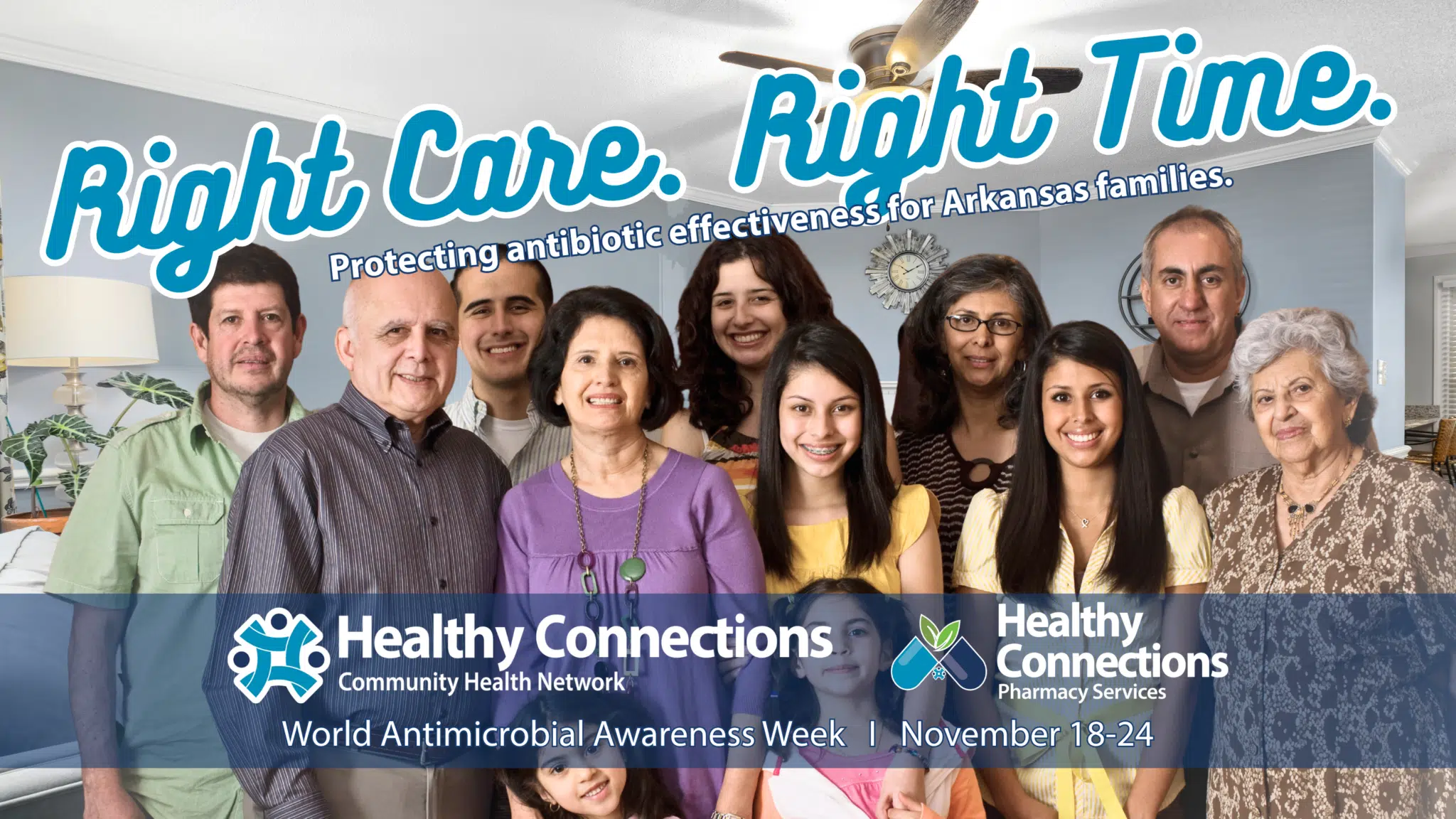
Antibiotics have transformed modern medicine, but they are losing effectiveness at a rate that should concern every family in Arkansas. World Antimicrobial Resistance Awareness Week (WAAW), observed each year from November 18–24, highlights a growing reality: antimicrobial resistance is not a future threat—it is happening now. The 2025 theme, “Act Now: Protect Our Present, Secure Our Future,” underscores the urgent need to use antibiotics and other antimicrobial medications responsibly so they remain effective for generations to come.
Antimicrobial resistance (AMR) develops when bacteria, viruses, fungi, or parasites stop responding to the medicines designed to treat them. As resistance increases, common infections become harder—sometimes impossible—to treat. This affects children with frequent respiratory illnesses, adults managing chronic conditions, and seniors who rely on effective medications when infections occur. Understanding how to use antibiotics safely is one of the most important steps toward protecting your health and the health of your community.
What Antimicrobial Resistance Actually Is (and Isn’t)
AMR happens when microorganisms adapt in ways that allow them to survive treatment. This means the microbes become resistant—not your body. When antibiotics or other antimicrobial medications are used when they aren’t needed, used incorrectly, or taken inconsistently, resistant strains have a better chance of surviving and spreading.
Why It Matters in Arkansas
- Infections that once responded to routine treatment now require stronger, more expensive medications.
- Resistant illnesses lead to longer recovery times, more clinic visits, and a higher risk of complications.
- Medically fragile patients—children, seniors, those with chronic diseases—face the greatest risk when common treatments fail.
Using antibiotics wisely protects their effectiveness and helps prevent these outcomes.
When Antibiotics Help—and When They Don’t
Healthy Connections providers see patients every day with symptoms that feel severe but do not require antibiotic treatment. This is especially true during cold and flu seasons, when viral illnesses are widespread.
Antibiotics CAN treat:
- Strep throat
- Bacterial pneumonia
- Urinary tract infections
- Certain skin infections
Antibiotics CANNOT treat:
- Colds
- Flu
- Most sinus infections
- Most bronchitis
- Viral sore throats
- Most childhood ear infections
Antibiotics do not shorten the course of viral illness. Using them when they aren’t needed only increases the risk of resistance and avoidable side effects.
Real Situations Our Providers See Every Day
“I always get a Z-Pak when this happens.”
Treatment decisions are based on evidence, not past prescriptions. What worked once may not be appropriate today.
“My child has green mucus—don’t they need antibiotics?”
Mucus color is not a reliable indicator of bacterial infection. Most respiratory illnesses in children are viral.
“I saved leftover antibiotics and took them early.”
Taking leftover antibiotics is unsafe and ineffective. It often means the wrong drug, dose, and duration.
“I’m not getting better fast enough—should we add an antibiotic?”
Antibiotics do not speed recovery from viral infections and can cause harmful side effects.
These situations are common, and our providers address them every day using CDC-supported, evidence-based guidelines.
How Healthy Connections Protects Patients Through Responsible Prescribing
We prescribe antibiotics when medical evidence shows they are needed—and only then.
Our Clinical Approach
- Evidence-based diagnosis using national guidelines
- Careful assessment of symptoms, duration, and medical history
- Diagnostic testing (strep, flu, COVID-19, urinalysis, etc.) when appropriate
- Clear communication about treatment choices
This is not withholding care. It is providing the safest, most effective care.
How Our Pharmacy Team Strengthens Antibiotic Safety
Our pharmacy services work closely with medical providers to ensure antimicrobial medications are used safely and effectively.
Pharmacists Provide:
- Verification of correct medication, dose, and duration
- Drug-interaction and safety checks
- Counseling on proper use and expected effects
- Reinforcement of completing the full prescribed course
- Support for patients with chronic medical conditions
This team-based approach protects patients across all Healthy Connections locations.
How Patients Can Help Prevent Resistance
Do:
- Take antibiotics exactly as prescribed
- Finish the full course
- Ask questions when you’re unsure about your treatment plan
- Seek evaluation when you’re sick rather than self-treating
Do NOT:
- Request antibiotics for colds, flu, or allergies
- Save leftover antibiotics
- Share medications with family or friends
- Stop treatment early unless directed by your provider
These steps directly help reduce AMR in our communities.
Why Responsible Antibiotic Use Supports Health Across Generations
Antibiotics and other antimicrobial medications are shared community resources. When resistance rises, effective treatments disappear. Protecting these medications today ensures safer, more reliable care for future generations across Arkansas—exactly what the theme “Act Now: Protect Our Present, Secure Our Future” calls for.
Healthy Connections remains committed to responsible prescribing so antibiotics remain powerful tools—not weakened ones.
FAQ: What Patients Search for Most
1. How can I tell if my infection is viral or bacterial?
You usually can’t. Symptoms overlap. A medical evaluation is the safest way to know.
2. Why didn’t I get an antibiotic this time if it helped before?
Evidence changes, diagnostic tools improve, and many past antibiotic prescriptions were unnecessary.
3. Are antibiotics ever dangerous?
Yes. They can cause allergic reactions, diarrhea, rashes, yeast infections, C. difficile, and drug interactions.
4. What if my symptoms get worse after being told it’s viral?
Return for re-evaluation. Viral illnesses can evolve or complicate over time.
5. How does Healthy Connections decide when to prescribe antibiotics?
Through evidence-based evaluation using national clinical guidelines and appropriate testing.
Your Health, Our Experts
If you’re feeling sick and want to know whether an antibiotic is truly necessary, Healthy Connections is ready to help. You can call 888-710-8220, schedule online at healthy-connections.org, or walk in during clinic hours. We will get you seen as quickly as possible so you receive the right treatment based on evidence—not assumptions.
Patients visiting our Mena clinic can use our in-house pharmacy for same-day medication access and pharmacist counseling. All patients, at every location, can discuss medications, antibiotic safety, and treatment options directly with their provider. At your appointment, ask your provider about the pharmacy services available to you and how we ensure antibiotics are used safely, responsibly, and effectively.