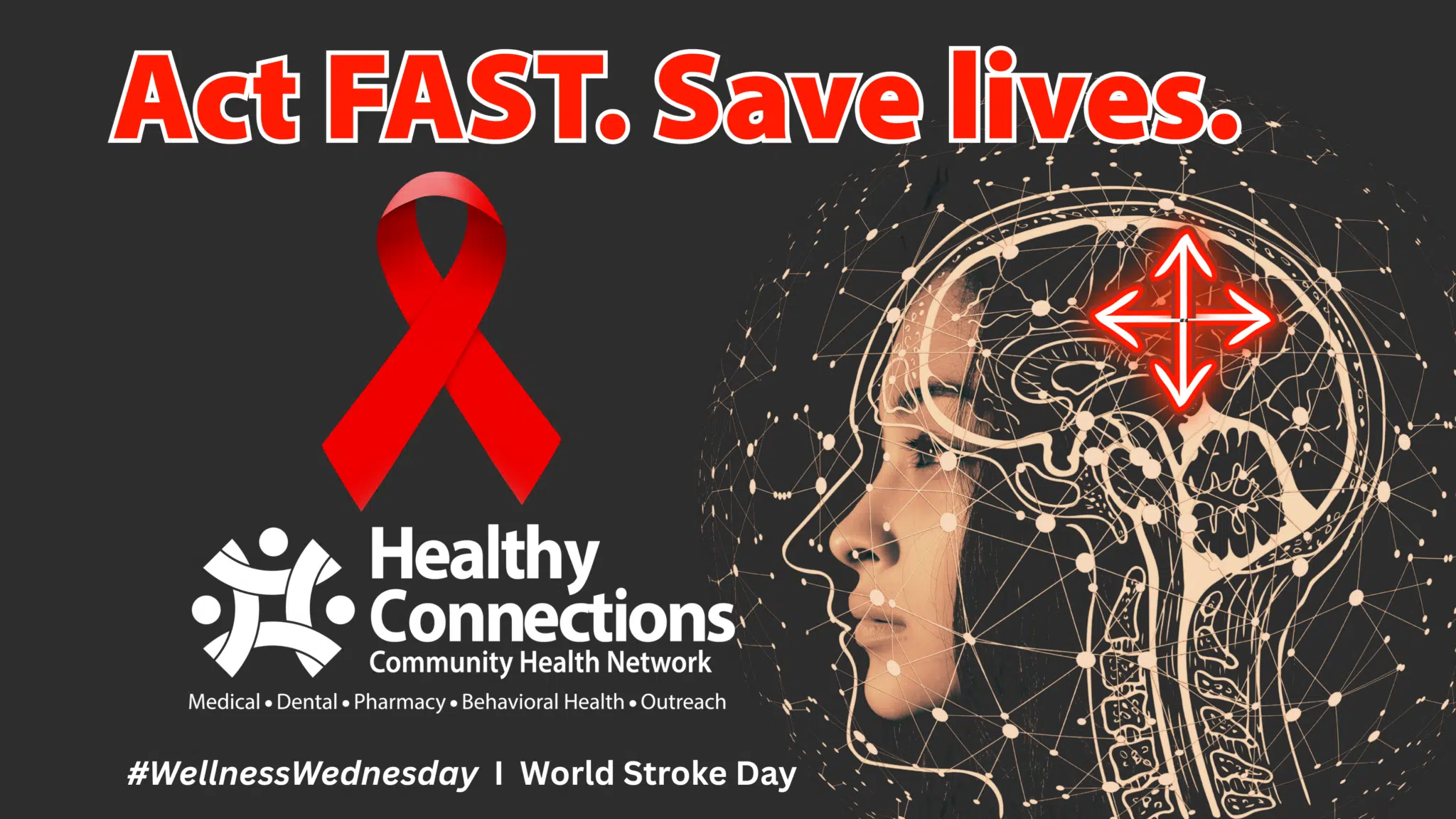
Today is World Stroke Day, a global reminder of how critical it is to recognize the warning signs and act fast. Every year, nearly 800,000 Americans experience a stroke—one of the nation’s leading causes of long-term disability and death. For this #WellnessWednesday, Healthy Connections encourages everyone to learn the signs, understand the risks, and take steps to protect themselves and those they love.
What Happens During a Stroke
A stroke occurs when blood flow to the brain is blocked or when a blood vessel bursts, depriving brain tissue of oxygen and nutrients. The two main types are:
- Ischemic stroke: Caused by a blood clot or blocked artery.
- Hemorrhagic stroke: Caused by a ruptured blood vessel.
Both require immediate medical attention. Brain cells begin to die within minutes, which is why recognizing symptoms and responding quickly can mean the difference between full recovery and lasting damage.
Recognizing Stroke Symptoms
Quick action saves lives. The acronym FAST helps identify the most common warning signs:
- F – Face drooping: One side of the face may look uneven or feel numb.
- A – Arm weakness: One arm may drift downward or feel weak.
- S – Speech difficulty: Speech may sound slurred or hard to understand.
- T – Time to call 911: Even if symptoms fade, call emergency services immediately.
Other warning signs can include sudden confusion, blurred vision, dizziness, severe headache, or loss of coordination. If you suspect someone is having a stroke, don’t wait—call 911 right away.
Reducing the Risk
While some risk factors—like age and family history—can’t be changed, many can be managed with healthy choices and regular medical care:
- Control blood pressure: The leading cause of stroke.
- Manage diabetes: Keep blood sugar levels within range.
- Lower cholesterol: Eat well and stay active.
- Avoid smoking and limit alcohol: Both raise stroke and heart disease risks.
- Exercise regularly: Aim for 30 minutes of moderate activity most days.
Your Healthy Connections provider can help you track these risks through preventive care, screenings, and medication management. Schedule a cardiovascular risk screening today at www.healthy-connections.org.
From Prevention to Recovery
Recovery depends on how quickly treatment begins. Early rehabilitation, follow-up appointments, and continued care are key to regaining independence and quality of life. Patients often benefit from physical therapy, occupational therapy, medication management, and regular provider visits to prevent future strokes.
Healthy Connections clinics across Arkansas—including Mena, Hot Springs, Malvern, Arkadelphia, and Russellville—offer accessible, coordinated care for those recovering from or at risk for stroke. Call 888-710-8220 to schedule a visit or request a referral today.
Take Action Today
Stroke prevention starts with awareness and proactive healthcare. Regular checkups, healthy habits, and knowing the FAST warning signs can save lives.
Don’t wait for a warning—protect your brain and your future. Visit www.healthy-connections.org or call 888-710-8220 today.