World AIDS Day shouldn’t still be necessary — but it is. Not because modern medicine has failed, but because stigma and silence continue to do more damage than the virus itself. In 2025, no one should be afraid to get a simple, confidential HIV test. Yet people across Arkansas still hesitate for the same reason: not because testing is difficult, but because they’re worried about what someone else might think. That fear costs people time, health, and sometimes years of their lives.
The numbers make this painfully clear. In the United States, about 1.2 million people are living with HIV, and one in eight still don’t know their status. Nearly 40% of new infections come from people who didn’t know they had HIV at all. Worldwide, 39 million people live with HIV, and 9 million are unaware of their status. And last year alone, 630,000 people died from AIDS-related causes — deaths that were overwhelmingly preventable with earlier testing and treatment. These are not just statistics. These are failures of stigma, shame, and silence.
The Reality: HIV Has Changed — Stigma Has Not
HIV today is one of the most studied and most manageable chronic conditions in the world. Treatment is effective, safe, and widely available. When people start care early and stay in treatment, most achieve an undetectable viral load, which protects their health and means they cannot transmit the virus sexually. This is proven science recognized globally.
But people don’t benefit from this progress if stigma keeps them out of the clinic. And in Arkansas, that hesitation is real. Every day, someone feels a tightness in their chest, wonders if they should get tested, and then talks themselves out of it because they fear judgment. They’re not the problem. Stigma is.
The Cost of Silence: Too Many People Learn the Truth Too Late
Across the United States, nearly 1 in 5 people diagnosed with HIV learn their status late, after the virus has already affected their immune system. That delay makes treatment harder, the emotional impact heavier, and the future much more uncertain. None of this happens because people don’t care. It happens because they were isolated by fear or misinformation. The tragedy is not medical — it’s cultural.
Too many communities still whisper about HIV as if it belongs to another generation. Too many people feel judged before they even walk through the door. And too many families don’t talk about sexual health at all. Silence does not protect people. It leaves them unprepared.
The Truth: Testing Is How You Take Back Control
Testing is not a moral statement.
It is not a verdict on someone’s lifestyle.
It is not an invitation for judgment.
Testing is information.
Testing is protection.
Testing is control.
People don’t avoid HIV testing because the process is complicated. They avoid it because they’re afraid of reactions. But that fear disappears when people understand what early testing actually gives them: a normal life expectancy, effective treatment, peace of mind, and a future that isn’t defined by uncertainty.
If you’ve ever hesitated to get tested because you were worried about being judged, you’re not alone — and there is nothing wrong with you. The problem is the stigma that convinced you to stay quiet.
The Global Perspective: We Should Be Farther Ahead Than This
HIV is one of the most medically controlled viruses on the planet. Yet stigma remains one of the least addressed public health failures. The fact that hundreds of thousands of people worldwide still die from AIDS-related causes — in an era when treatment works — should make every one of us uncomfortable. Because this isn’t a failure of medicine. It’s a failure of communication, compassion, and community responsibility.
The Local Responsibility: Arkansas Can Do Better
Confidential HIV testing in Arkansas is available, accessible, and grounded in the same medical standards used nationwide. But people won’t use these services if they don’t feel safe, respected, and treated like human beings.
People living with HIV in Arkansas are parents, coworkers, partners, and friends — not statistics. They deserve care free from judgment, conversations free from shame, and communities that understand the truth instead of repeating old myths.
The Commitment: Healthy Connections Is Here For Everyone
For more than 25 years, Healthy Connections has done what public health demands:
- Provide confidential HIV testing grounded in compassion.
- Offer treatment that reflects the most current national standards.
- Deliver care without judgment — ever.
- Tell the truth clearly, directly, and without stigma.
You can schedule confidential testing or talk with a provider today by calling 888-710-8220 or visiting www.healthy-connections.org.
As an FQHC, Healthy Connections plays a critical role in closing testing gaps, supporting rural communities, and ensuring people receive the care they need no matter where they live or what they fear.
The Moment: This Is When It Changes
Tomorrow really can look better than today — but only if you take the first step. Start by checking your status. Ask the questions you’ve been holding back. Learn the facts instead of carrying the fear. Talk with a provider who sees you as a human being, not a judgment.
Your care will be confidential, your dignity will be protected, and your health will always come first.
This is how you take back control. This is how you protect your future. This is how change begins — with one honest decision.
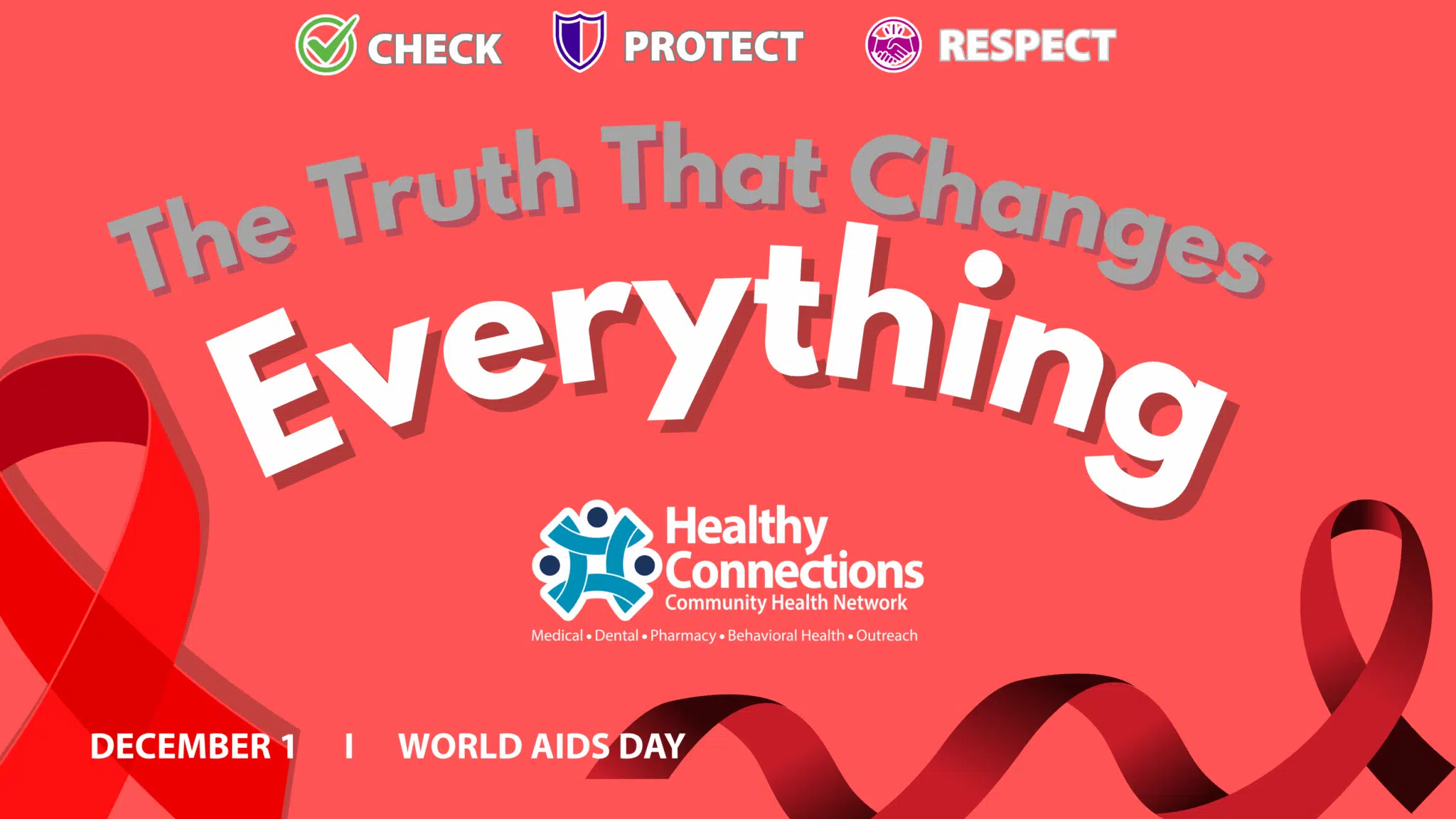
Check. Protect. Respect. For you. For your partner. For your family. For your friends. For your community.