
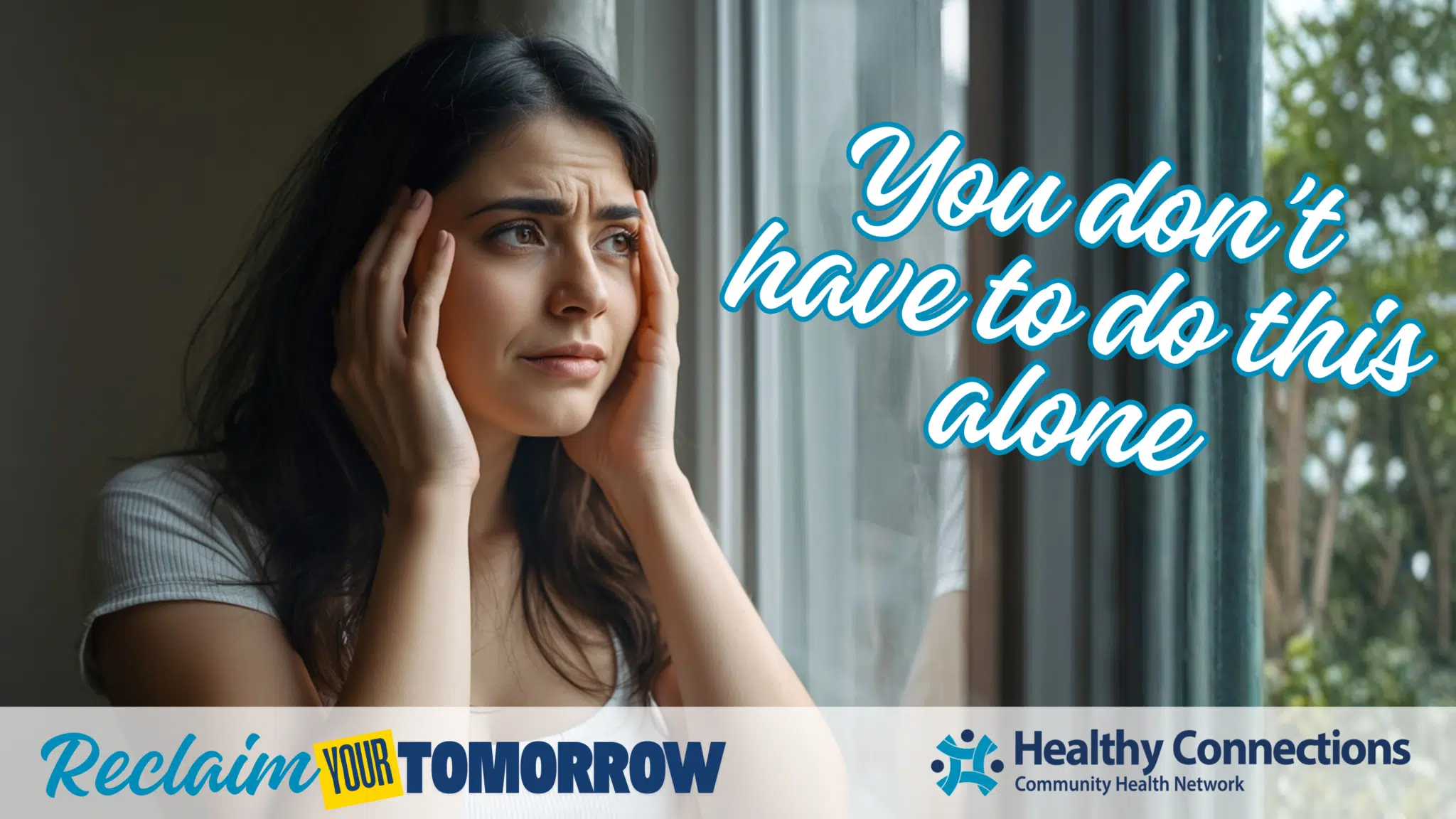
You don’t have to do this alone.
How much longer are you going to carry this by yourself?
That question may be uncomfortable, but for many people struggling with opioid addiction, it is necessary.
Because isolation has a way of making everything heavier.
The stress feels heavier. The shame feels heavier. The next step feels harder to take. Even when someone knows something needs to change, trying to figure it all out alone can make treatment feel impossible before it ever begins.
That is one of the biggest lies addiction tells people:
You have to handle this by yourself.
But that is not true.
Recovery is not meant to be carried alone. Treatment works best when people have support, structure, medical care, and a team that helps them keep moving forward.
That is why this message matters:
You Don’t Have to Do This Alone
Trying to handle everything alone can keep people stuck.
A lot of people wait to ask for help because they believe they should be able to manage things on their own.
They tell themselves:
- “I should be stronger than this.”
- “I don’t want anyone to know.”
- “I don’t want to burden anyone.”
- “I’ll deal with it when things calm down.”
But things usually do not calm down on their own.
Over time, trying to manage addiction alone can create a cycle that becomes harder to break. People may pull away from family, avoid conversations, miss appointments, or stop believing anyone can understand what they are going through.
That isolation is dangerous.
Not because someone is weak, but because addiction thrives when people are disconnected from support.
The longer someone carries it alone, the heavier it becomes.
Support Changes the Direction
Support does not mean someone else fixes everything for you.
It means you do not have to face every step by yourself.
Support can look like:
- a provider who listens without judgment
- a care team that helps you understand your options
- behavioral health services that help address stress, trauma, or emotional challenges
- medication that helps reduce cravings and withdrawal symptoms
- a treatment plan that gives structure to the next step
For many people, that support is what makes recovery feel possible again.
Not easy.
Possible.
And that distinction matters.
Recovery is not built on willpower alone. It is built through steady support, medical care, accountability, and progress over time.
How Medication-Assisted Treatment Can Help
For individuals struggling with opioid addiction, Medication-Assisted Treatment (MAT) can be an important part of recovery.
MAT combines FDA-approved medications with medical support, behavioral health services, and long-term treatment planning. This approach can help reduce cravings and withdrawal symptoms while giving patients a stronger foundation to rebuild stability in daily life.
According to the Substance Abuse and Mental Health Services Administration (SAMHSA), combining medication with counseling and behavioral therapies can support recovery for individuals with opioid use disorder.
That stability matters.
When cravings are more manageable, people may be better able to:
- keep appointments
- return to work consistently
- rebuild family relationships
- focus on mental and physical health
- make decisions with more clarity
- begin planning for the future again
Medication-Assisted Treatment is not about replacing one problem with another.
It is evidence-based care designed to help people stabilize, recover, and move forward with support.
Asking for Help Is Not Failure
One of the biggest barriers to treatment is shame.
Too many people believe asking for help means they have failed.
But that is not true.
Asking for help means something inside you still believes life can be better than this. It means you are willing to take a step toward stability, health, and a future that does not have to look like today.
People ask for help in every area of healthcare.
They ask for help managing blood pressure. They ask for help with diabetes. They ask for help with pain, anxiety, infection, pregnancy, and countless other medical needs.
Addiction deserves the same kind of care.
Not judgment.
Not shame.
Care.
What Support Looks Like at Healthy Connections
At Healthy Connections, patients are not expected to walk in with everything figured out.
That is not how recovery works.
Our role is to meet people where they are, listen to what is happening, and help them understand what options are available.
For more than 25 years, Healthy Connections has served communities across Arkansas with medical, dental, behavioral health, and Medication-Assisted Treatment services. That experience matters because recovery is connected to more than one part of life.
Physical health matters.
Mental health matters.
Stability matters.
Trust matters.
Support matters.
That is why our care is built around the whole person—not just one diagnosis or one difficult season.
Patients deserve to be treated with dignity, respect, and honesty from the first conversation forward.
You Do Not Have to Have All the Answers
Many people delay treatment because they think they need to know exactly what to say, what to ask, or what kind of help they need.
You do not.
The first step can simply be a conversation.
You can ask questions. You can explain what has been happening. You can talk through what feels hardest right now. From there, a care team can help you understand what comes next.
That may include Medication-Assisted Treatment.
It may include behavioral health support.
It may include primary care.
It may include a combination of services designed to help you regain stability.
You do not have to know the whole path before you take the first step.
You just have to stop carrying it by yourself.
What Happens When You Call
Taking the first step does not mean you are committing to everything overnight.
It starts with a conversation.
Our team will listen, answer questions, and help you understand what options are available. From there, we work with you to identify the next step that fits your situation, your needs, and your pace.
No pressure.
No judgment.
Just support and a path forward.
You Don’t Have to Do This Alone
There is no shame in needing support.
There is danger in believing you are supposed to survive everything alone.
Recovery takes courage, but courage does not mean doing everything by yourself. Sometimes courage means picking up the phone. Sometimes it means showing up to an appointment. Sometimes it means finally telling the truth about how heavy things have become.
That step matters.
Because one conversation can become a plan.
One appointment can become momentum.
One decision can become the start of a different future.
This is what Reclaim Your Tomorrow is about.
Not pretending the road is easy.
Not promising everything changes overnight.
But making one thing clear:
You don’t have to do this alone.
Take the First Step Today
If you or someone you love is struggling with opioid addiction, Healthy Connections is here to help.
Our compassionate, confidential Medication-Assisted Treatment program is designed to support patients with dignity, respect, and evidence-based care.
Learn more about our Medication-Assisted Treatment (MAT) services at https://healthy-connections.org/services/mat-opioid-treatment/ or call 888-710-8220 to get started.
You do not have to carry this by yourself.
Help is here.